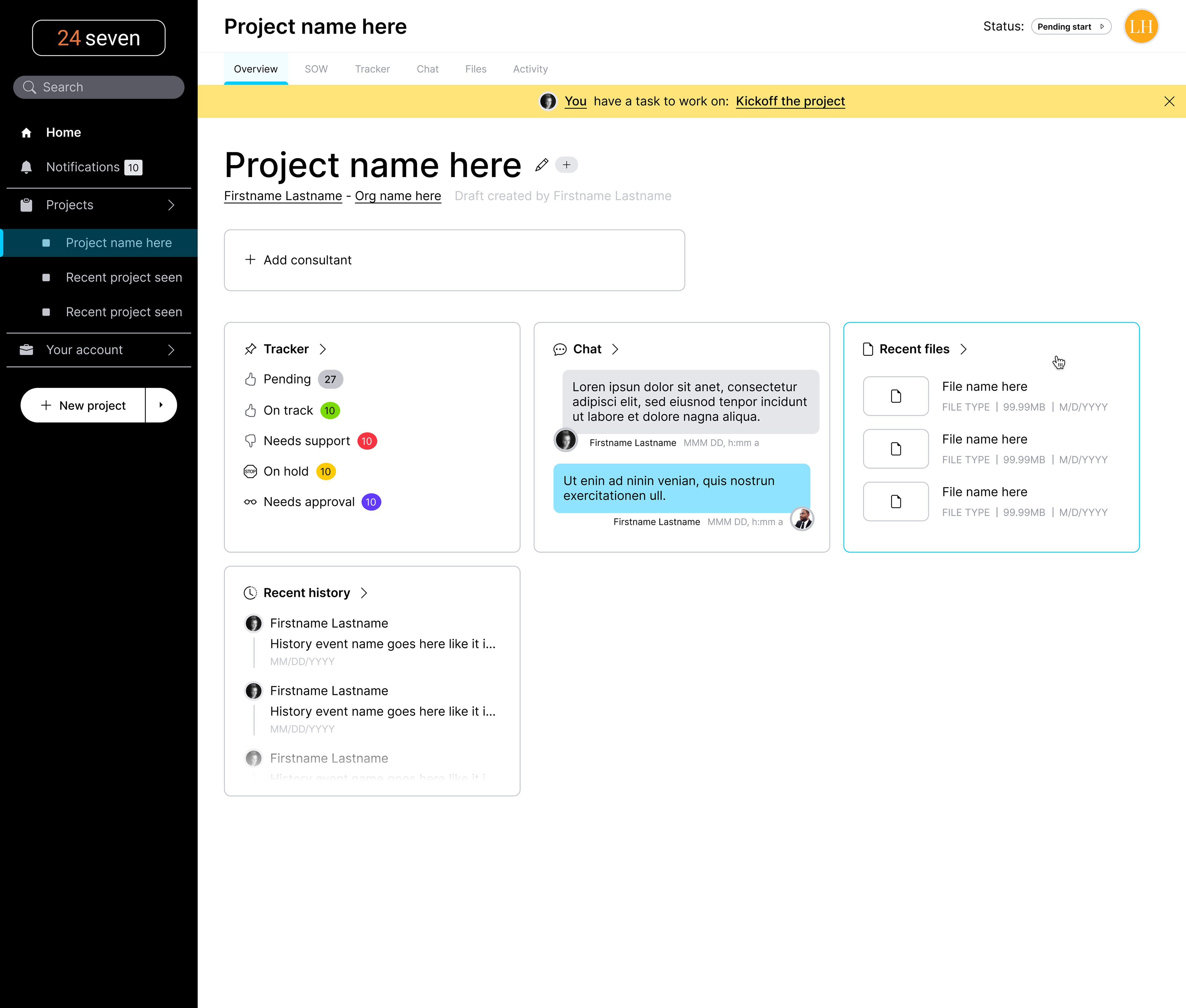
The problem: Project managers need a system that automatically updates the project's progress, KPIs, and deliverables instead of the current manual system.
We were approached by Simplicity, a consultant management company, to investigate a tech solution to their project tracker and client portal. We decided to do an investigation to map out what a product like this would look like and if it would meet their needs.
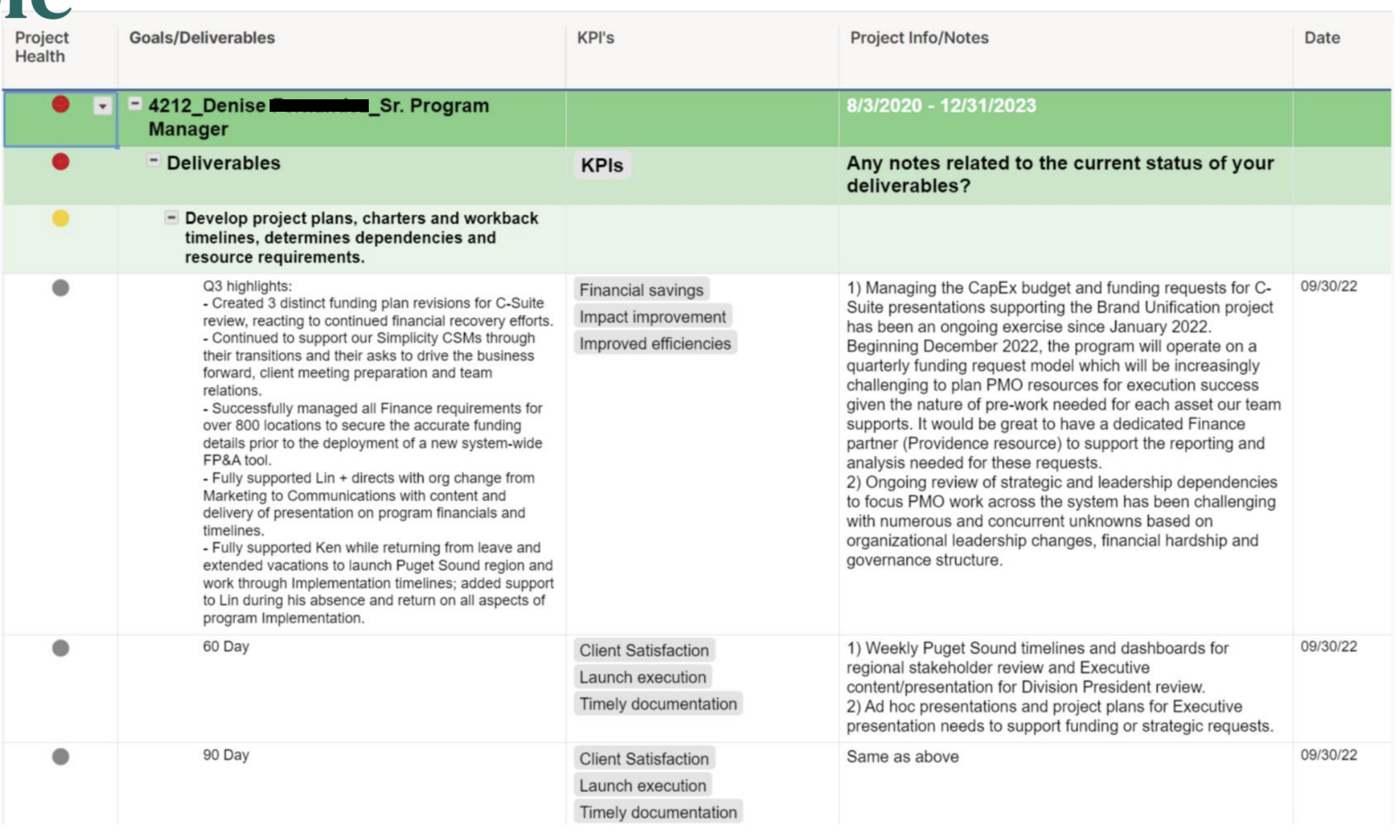
The old project tracker that consultants were not good at keeping updated
Contstraints: We already had a similar product where contractors input their deliverables and time, which automatically updates the project. To deliver this quickly, we chose to stay within that framework; the code was built, the UI was built. This was *almost* like a white-paper solution.
I wasn't concerned with technical feasibility. We already had a product that was similar to the client portal view and we could essentially use the existing product as a guide (and use the existing tech) and adapt it to the special needs of Simplicity.
The current Sketchdeck platform that provided the framework did not have all of the necessary features the Project Managers at Simplicity needed. They're project model was different, with much longer-term project and different tracking metrics to go with that.
I needed to delve deeper into what the Simplicity PM team needed.
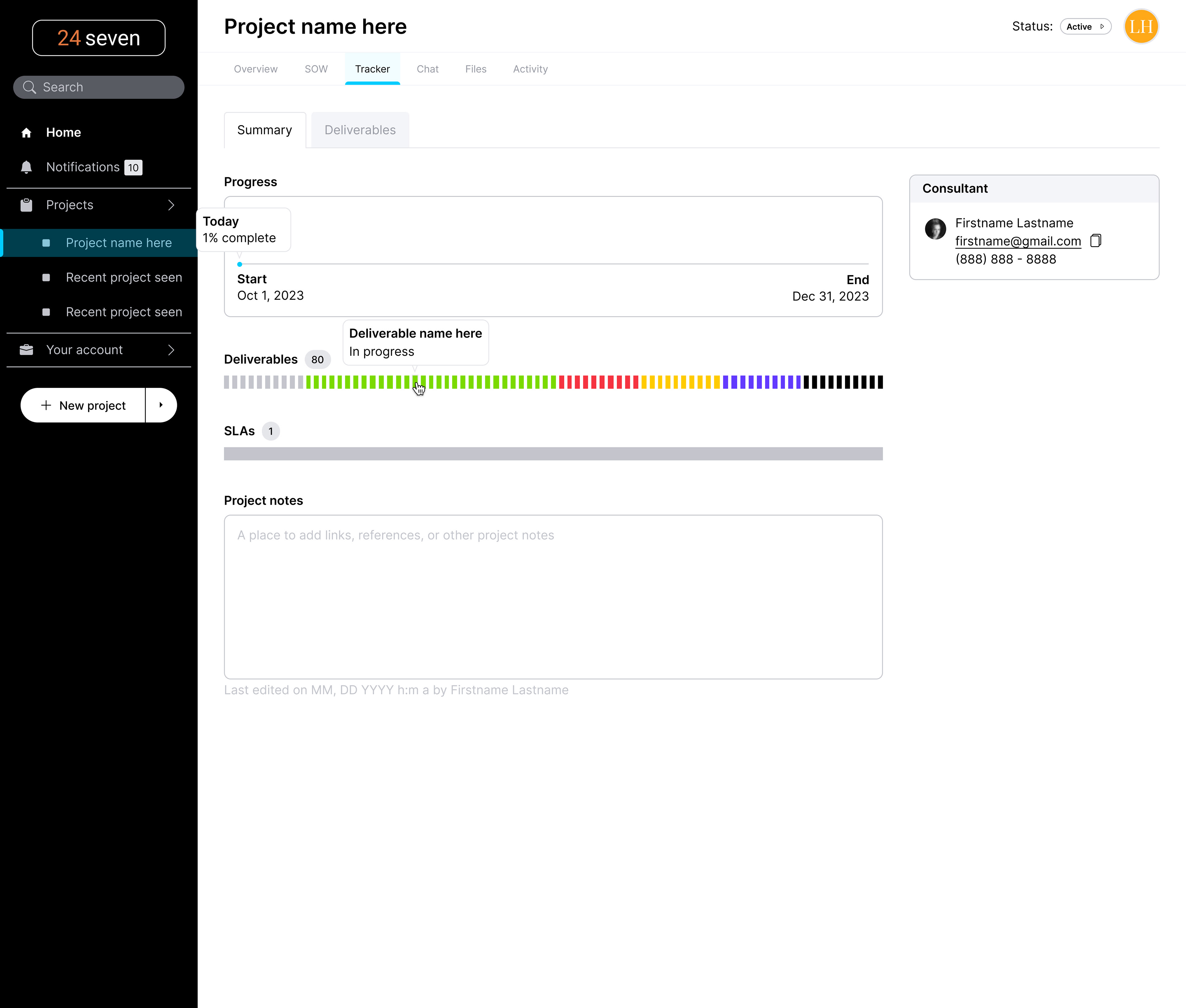
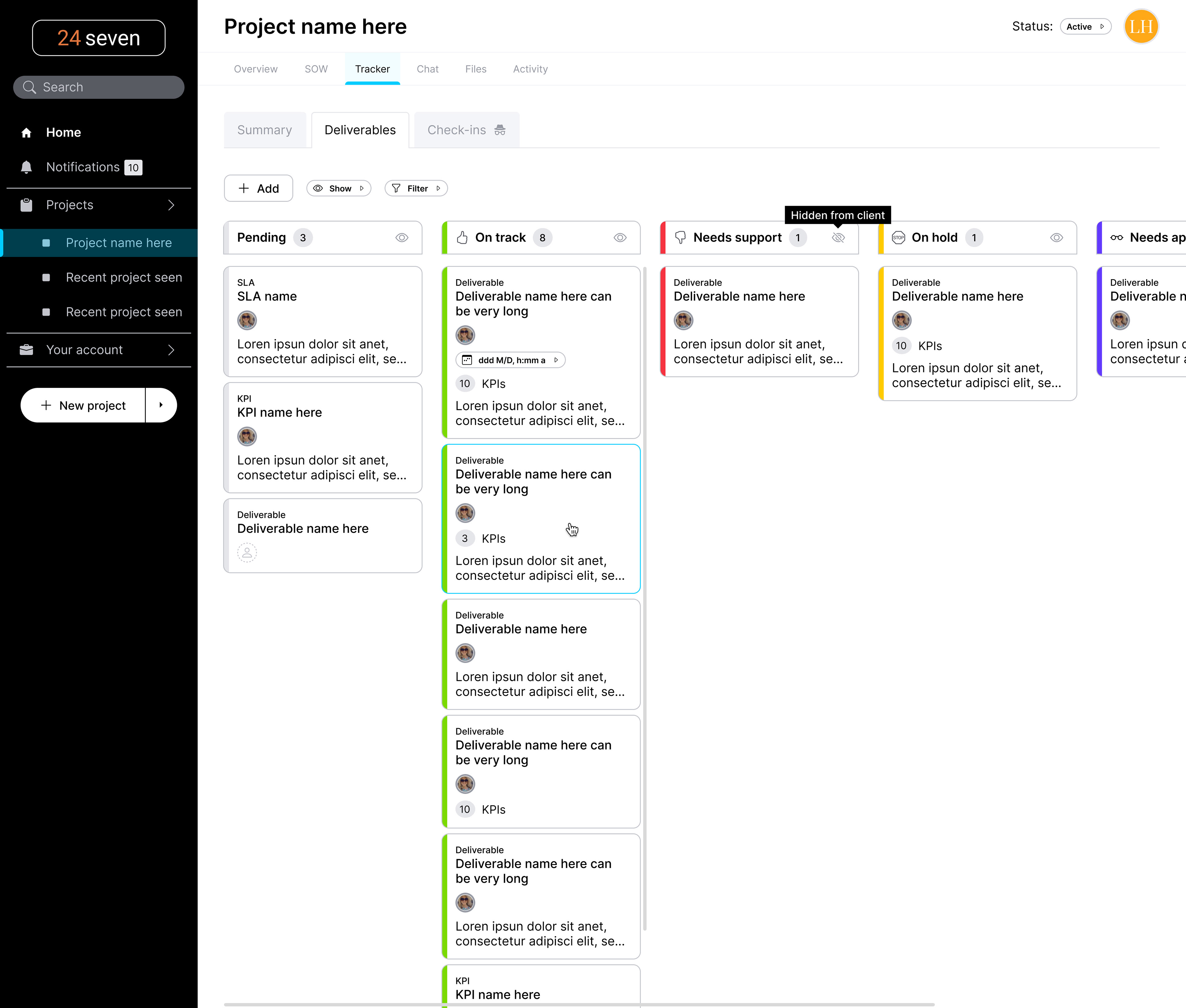
We added features to the Sketchdeck product for Simplicity, such as a tracker for progress, deliverables, and SLAs. This fit Simplicity's project timeline much better than Sketchdeck's quick-turnaround project model
There were some new features that the SketchDeck platform does not have like the project tracker. Simplicity had a project tracker in the form of a spreadsheet that was universally disliked by all of the project managers. I took the necessary features the PMs used in the tracker and automated it with our platform. When consultants updated their files, instead of a PM updating the spreadsheet, the project did the work for them.
I did a series of interviews with managers from Simplicity in two different groups: one group worked exclusively for a large employer, the other was "strategic accounts" and worked on ad hoc and other recurring clients.
I learned that each group had very different work flows and needs. The project tracker was the product that they agreed would make the most sense. The goals and problems to solve were:
- Do not duplicate work of adding deliverables to the SOW as well as to the project tracker;
- A place for clients to view and monitor the progress of the hired consultant;
- A system that the consultants would actually use to track and change statuses of deliverables;
- All documentation in one place for the SOW requirements, files, project tracker, and check-ins.
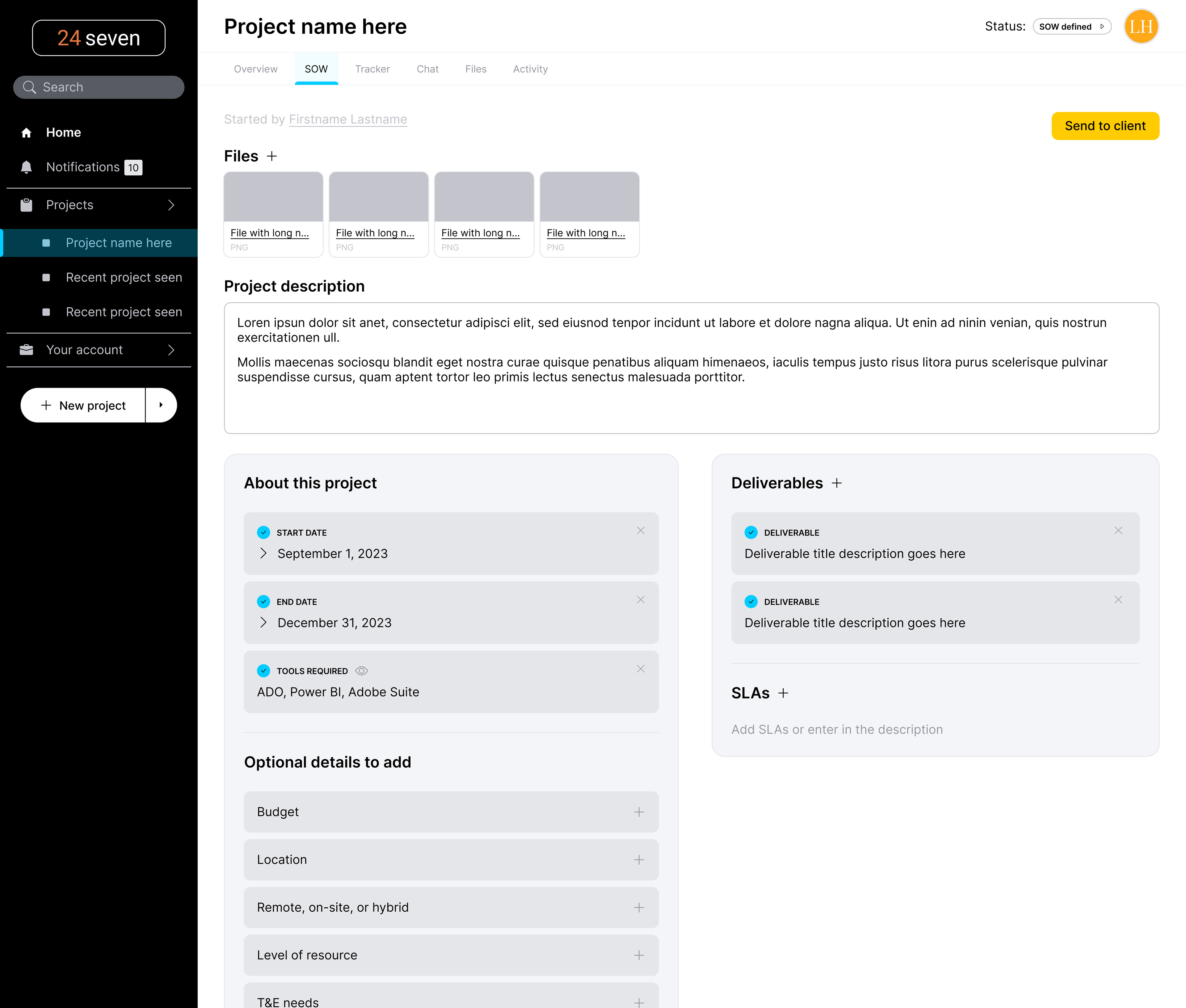
Outcome: A project tracker where the project setup is the same amount of work, but this sets up inputs for contractors, sending them task descriptions and deadlines. They upload their work and this updates the tracker. A project overview screen shows basic project metrics like completed tasks, project files, and full history.
The fun part of this project was creating a whole new product. I worked closely with the managers from Simplicity in a series of interviews and mockup reviews to refine the designs and narrow down the MVP for this product. We designed and built a new platform that their managers can use to create and track projects, clients can review SOWs and monitor progress, and hired consultants can receive their deliverables, deadlines, and in a kanban style, easily change status on their projects.